
Services / CE marking for electrical equipment
CE marking under the Low Voltage Directive, EMC and RoHS
For electrical products sold in the EU: we map the Low Voltage, EMC and RoHS requirements, coordinate testing and prepare the technical file and declaration, from $800.
From $800Consultancy and notified body package
- Accredited by IAB and INTAQS
- Issuing certificates since 2004
- Online or on-site audits worldwide
- Verify any EUROTECH certificate
What the electrical CE package covers
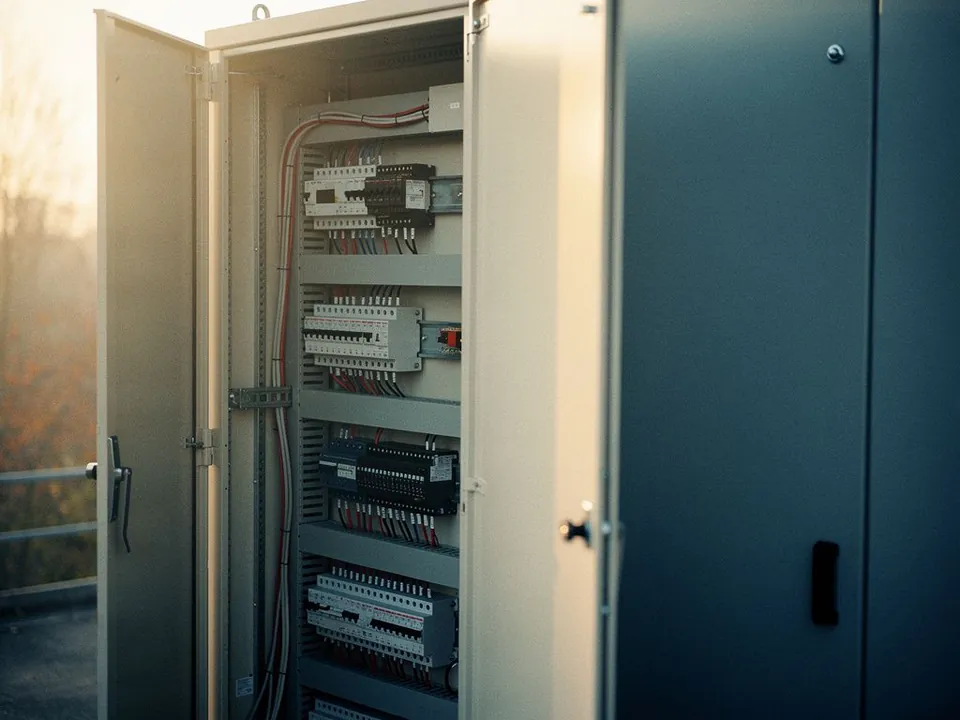
Electrical products are the most common CE marking cases we see: control panels, power supplies, lighting, small appliances, laboratory instruments, chargers and industrial electrical equipment. Most of them fall under three pieces of EU legislation at the same time, and each one needs its own evidence in the technical file.
The Low Voltage Directive 2014/35/EU covers electrical equipment designed for use with a voltage between 50 and 1000 V AC or 75 and 1500 V DC. It sets safety objectives against electric shock, fire, mechanical and other hazards. The EMC Directive 2014/30/EU makes sure equipment does not cause electromagnetic disturbance beyond set limits and is immune enough to work as intended. The RoHS Directive 2011/65/EU restricts certain hazardous substances in electrical and electronic equipment.
If your product has a radio function, such as Wi-Fi, Bluetooth or cellular connectivity, the Radio Equipment Directive 2014/53/EU applies instead of the LVD and EMC directives and brings its own requirements. If it is a machine with electrical parts, the Machinery Directive may be the main legislation. We sort this out at the start, because it decides everything that follows.
- Mapping of LVD, EMC, RoHS and any other legislation that applies
- Selection of harmonised standards, for example product safety and EMC emission and immunity standards
- Test plan and coordination with accredited laboratories
- RoHS evidence from your component suppliers
- Technical file, EU Declaration of Conformity and labelling review
Your options: reuse, test or redesign
For many electrical products the main cost is testing, so the first question is what you already have. Valid test reports from accredited laboratories against the current harmonised standards can often be reused. Reports against withdrawn versions, or for a different variant of the product, usually cannot.
When testing is needed, a pre-compliance check is often worth it for EMC. Emission and immunity failures are common on a first full test, and finding them early on a cheaper bench test saves a second round in the accredited laboratory.
If a product fails, the options are a design change, such as filtering, shielding, layout or component changes, or in some cases a narrower intended use. We explain what the test result means and what each option involves, so your engineers can decide.
RoHS evidence is gathered rather than tested in most cases: supplier declarations, material data and, where risk is higher, analysis reports for specific parts. A structured approach to supplier documentation saves time on every future product.
What decides the price
Electrical CE packages start at $800. The price mostly reflects how much testing and documentation your product needs.
- Product type and complexity: a simple power supply versus a multi-function control system
- Number of variants covered by one technical file
- Existing test reports that can be reused
- New tests needed for safety, EMC emission and EMC immunity
- Radio functions, which bring the Radio Equipment Directive into scope
- Component documentation available for RoHS
We confirm the price after a short review of your product, block diagram and existing documents, and put every item in a written quote.
Testing is usually the largest share of the budget, so we plan it carefully: one sample per variant only where the variants differ in ways that matter for safety or EMC, and a test order that finds the likely failures first.
How CE marking for electrical equipment works with us
Step 1
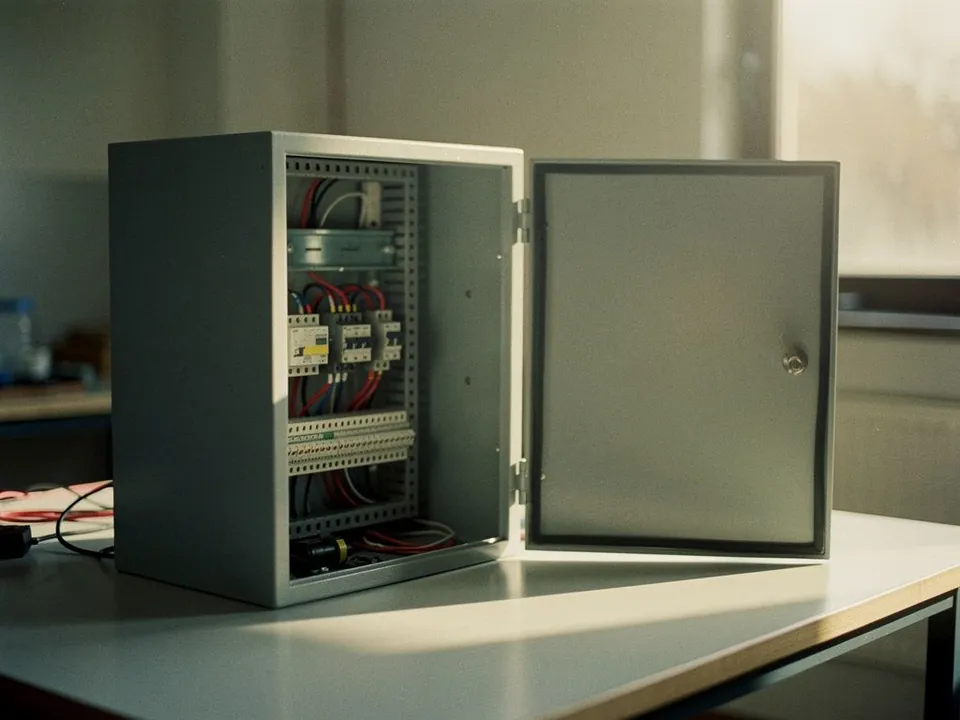
Directive and standard check
We confirm whether LVD, EMC, RoHS or the Radio Equipment Directive applies and list the standards.
Step 2
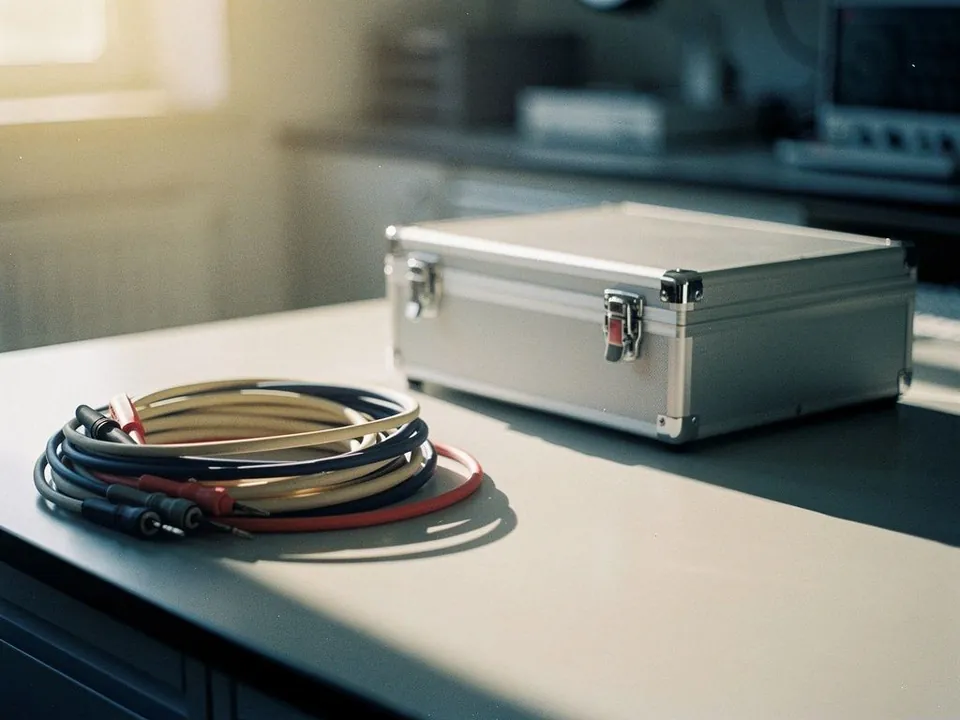
Testing with an accredited lab
Existing reports are reviewed and new safety and EMC tests are coordinated with a laboratory.

Step 3
Technical file and risk assessment
We build the file, gather RoHS evidence and review labels and instructions.

Step 4
Declaration and market
You sign the EU Declaration of Conformity and apply the CE mark to the product.
Exporting electrical products to Europe
Many of our clients for electrical CE marking are manufacturers in the USA and Asia who sell through European distributors. Products designed for the North American market often need changes before CE marking: mains plugs and voltage ratings, insulation and creepage distances to the European standards, and EMC performance against European limits.
Products placed on the EU market generally need an economic operator in the EU, such as an importer or an authorised representative. The manufacturer's name and address, and in many cases the importer's, must appear on the product or its packaging. We include this in the labelling review.
Instructions and safety information must be in the languages of the countries where the product is sold. For electrical products this includes installation, connection and safe use instructions, and the WEEE marking where the waste electrical equipment rules apply.
Energy-related products may also fall under ecodesign and energy labelling rules, which set efficiency and information requirements on top of safety. We flag these during the legislation mapping.
What to expect
We begin with your product description, circuit diagrams, bill of materials, user manual draft and any existing test reports. From these we confirm the legislation, list the harmonised standards and draft a test plan.
Testing is booked with an accredited laboratory, and we review the reports with you. In parallel we prepare the risk assessment, the technical file structure and the declaration. When the evidence is complete, you sign the EU Declaration of Conformity and affix the CE mark.
Expect questions from the laboratory about operating modes, cable lengths, accessories and the worst-case configuration to test. Having an engineer available who knows the product shortens this step and avoids testing the wrong configuration.
The conformity decision is the manufacturer's, based on the evidence. Our job is to make sure that evidence is complete, current and consistent across the file.
Keeping electrical products compliant
Component changes are the most common way an electrical product drifts out of compliance. A new power supply, a different display, a changed PCB layout or a new cable can affect safety, EMC or RoHS. Set up a simple check in your change process that asks whether a change affects conformity, and update the file when it does.
Harmonised standards are revised regularly and old versions are withdrawn after a transition period. Review the standards listed in your declaration at least once a year, and plan retests where a revised standard changes requirements that apply to your product.
Keep the test reports, component declarations and design documents together in one place for each product. When a market surveillance authority or a large customer asks for evidence, a complete file can be supplied within days instead of weeks.
How this service works: most electrical equipment under the Low Voltage and EMC directives is CE marked by the manufacturer's own declaration, without a notified body. Where your product falls under legislation that requires one, such as radio equipment in some cases, we arrange it and include the fees in your package. EUROTECH is not a notified body.
Questions buyers ask
Does electrical equipment need a notified body for CE marking?
Usually not. Most products under the Low Voltage and EMC directives are CE marked through the manufacturer's own declaration based on testing and a technical file.
How much does CE marking for electrical products cost?
Our packages start at $800. Testing needs, product variants and existing reports set the final price.
What voltage range does the Low Voltage Directive cover?
Equipment designed for use with 50 to 1000 V AC or 75 to 1500 V DC, with some exclusions listed in the directive.
Our product has Bluetooth. Which directive applies?
The Radio Equipment Directive 2014/53/EU, which covers safety and EMC as well as efficient use of the radio spectrum.
Can we use our UL or FCC test reports?
They can help, but CE marking needs evidence against the European harmonised standards and limits. We review what can be reused and what must be retested.
Is RoHS part of CE marking?
Yes. Electrical and electronic equipment in its scope must meet the RoHS restrictions, and the declaration of conformity refers to it.
Related services
- CE marking
From $800
- CE marking for machinery
From $800
- ISO 9001 certification
From $800
Get a quote for CE marking for electrical equipment
Tell us your company, sites and the standard you need. We reply with a written quote and the audit plan.
Prefer to talk? Call +1 307 205 1833
Monday to Friday, 09:00 to 18:00 (US Mountain Time)