
Services / PED certification for pressure equipment
PED certification for pressure vessels, boilers and piping
For makers of vessels, boilers, piping and pressure accessories: category assessment, technical file and notified body involvement under the Pressure Equipment Directive, from $800.
From $800Consultancy and notified body package
- Accredited by IAB and INTAQS
- Issuing certificates since 2004
- Online or on-site audits worldwide
- Verify any EUROTECH certificate
What the pressure equipment package covers
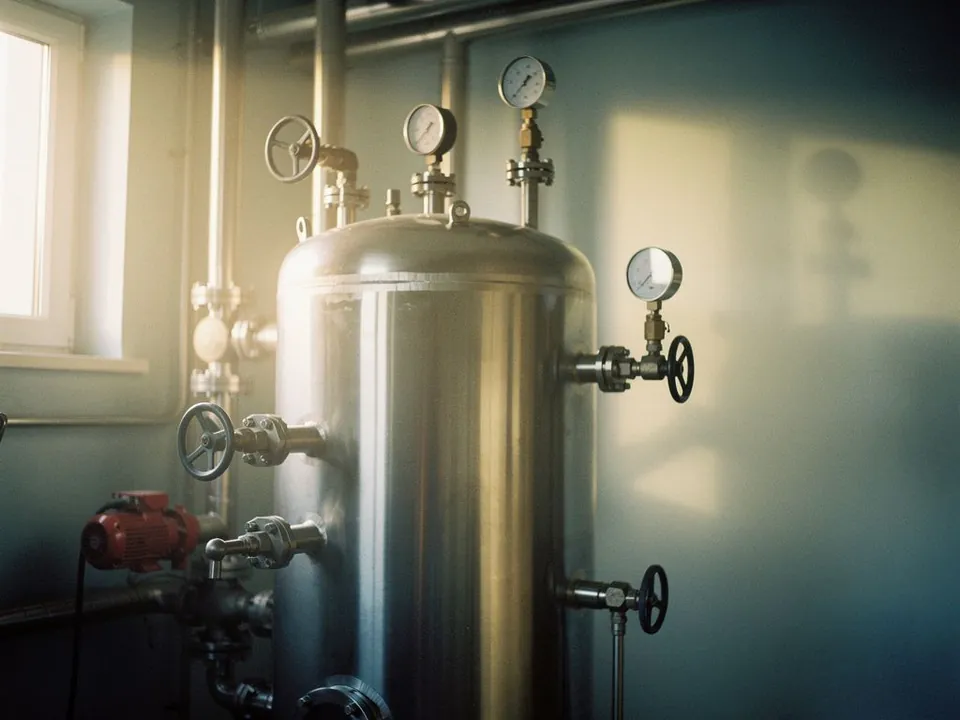
The Pressure Equipment Directive 2014/68/EU, known as PED, applies to the design, manufacture and conformity assessment of pressure equipment and assemblies with a maximum allowable pressure greater than 0.5 bar. It covers vessels, steam generators and boilers, piping, safety accessories such as safety valves, and pressure accessories such as valves and regulators.
Simple pressure vessels, meaning welded vessels of simple design for air or nitrogen, are covered by a separate directive, the Simple Pressure Vessels Directive 2014/29/EU. Transportable pressure equipment such as gas cylinders for transport follows yet another set of rules. Placing your product under the right directive is the first step.
Under PED, equipment is classified into a category from I to IV, based on the type of equipment, the fluid group, the maximum allowable pressure and the volume or nominal size. The higher the category, the stricter the conformity assessment. Equipment below category I that falls under sound engineering practice is designed and made to good practice but does not carry the CE mark.
- Category assessment using the PED conformity assessment tables
- Selection of conformity assessment modules for your category
- Design review support and calculations to harmonised standards
- Material and welding documentation: material certificates, welding procedures and welder qualifications
- Coordination of non-destructive testing and the final pressure test
- Technical file, EU Declaration of Conformity and nameplate review
If you are unsure which category applies, send us the design data and we will assess it before you commit.
Choosing the module for your category
Category I equipment can be assessed by the manufacturer under internal production control. From category II onward a notified body must take part, and the manufacturer chooses among the modules the directive allows for that category. Some modules focus on the design and a type, others on product verification or on the manufacturer's quality system.
For a one-off vessel or small batch, unit verification by the notified body is often the practical choice. For a manufacturer producing series, a quality system module may be more efficient over time, because the notified body audits the system and makes periodic visits rather than examining every unit in detail.
Permanent joining and non-destructive testing personnel also need approval for higher categories, either by a notified body or a recognised third-party organization. We check that your welding procedures and welder qualifications meet this before production starts, because finding the gap at final inspection is expensive.
What decides the price
Pressure equipment packages start at $800. The notified body fees are included in your package price where your category requires a notified body.
- PED category and the module chosen
- Type of equipment: vessel, boiler, piping, assembly or accessory
- Series or one-off production
- Design calculations and drawings already available
- Welding and NDT documentation in place
- Assemblies that combine several items into one unit
We confirm the price after reviewing your design data, fluid, pressure and volume, and list every fee in a written quote.
Getting the category right early is what controls cost. A small change in volume, pressure or fluid can move equipment into a higher category with a stricter module, so we check the category against your design options before the design is frozen.
How PED certification for pressure equipment works with us
Step 1
Directive and standard check
We confirm PED or the Simple Pressure Vessels Directive and work out the category.
Step 2
Testing with an accredited lab
Material, welding and non-destructive testing evidence is reviewed and coordinated.
Step 3
Technical file and risk assessment
Design calculations, hazard analysis and the technical file are prepared for review.

Step 4
Notified body and market
The notified body carries out its module; you then issue the declaration and mark.
Supplying pressure equipment into Europe
We support manufacturers in the USA, Europe, Asia and Africa. Equipment built to other codes, such as the ASME code, can be placed on the EU market only if it meets the PED essential safety requirements. In practice that often means reviewing materials, calculations, welding qualifications and testing against European requirements, and sometimes changing them.
Materials must be suitable for the intended use and supported by inspection documents. For main pressure-bearing parts in higher categories, the material certificates must be of a type with specific product control. Mill certificates from your current supply chain may or may not meet this, so we check them early.
Products placed on the EU market also need an EU economic operator, such as an importer or authorised representative, whose details appear where required. Instructions for installation, operation and maintenance must be in the languages of the countries of use.
Safety accessories, such as safety valves and pressure switches, protect the whole installation, so they are usually classed in category IV and need careful selection and documentation of their set pressure and capacity.
What to expect
We start from your design basis: fluid, maximum allowable pressure and temperature, volume or nominal size and intended use. With these we determine the category and the available modules, then agree the route with you and the notified body.
Design review comes next, with calculations to a harmonised standard where possible. During manufacture, the notified body carries out the inspections its module requires, which may include material checks, welding inspection, review of non-destructive testing and witnessing of the final pressure test.
Assemblies need their own assessment. If you combine vessels, piping and safety accessories into a functional unit, such as a skid or a packaged boiler, the assembly as a whole is assessed, including the protection against exceeding the allowable limits.
When all steps are complete, you issue the EU Declaration of Conformity and affix the CE mark with the notified body's identification number where required. The conformity decision rests on the evidence, and the notified body decides its part independently.
After CE marking
In service, pressure equipment is subject to national rules on installation, periodic inspection and operation in the country where it is used. These are separate from CE marking and set by each member state, so include clear information on inspection and maintenance in your instructions.
If you change the design, material or manufacturing method, check whether the change affects the category or the conformity assessment. Quality system modules also bring periodic surveillance visits by the notified body, so keep welding records, NDT reports and nonconformity records up to date between visits.
Keep a clear link between each delivered unit and its documentation: serial number, material certificates, weld maps, NDT reports and pressure test records. Inspectors in the country of use and future buyers of the equipment often ask for this traceability.
How this service works: EUROTECH is not a notified body. For pressure equipment in categories II, III and IV a notified body must take part; we prepare your file, coordinate the work and include the notified body fees in your package price.
Questions buyers ask
Does all pressure equipment need a notified body?
No. Category I equipment can be assessed by the manufacturer. Categories II to IV require a notified body.
How is the PED category determined?
By the type of equipment, the fluid group, the maximum allowable pressure and the volume or nominal size, using the tables in the directive.
Can ASME-built equipment be sold in the EU?
Only if it meets the PED essential safety requirements and goes through the right conformity assessment. Materials, calculations and welding often need review.
How much does PED certification support cost?
Our packages start at $800, including notified body fees where your category needs a notified body. Category, module and documentation set the final price.
What is the difference between PED and the Simple Pressure Vessels Directive?
The Simple Pressure Vessels Directive covers welded vessels of simple design for air or nitrogen. Other pressure equipment above 0.5 bar falls under PED.
Do welders need special approval?
For higher categories, welding procedures and welders must be approved by a notified body or recognised third-party organization.
Related services
- CE marking
From $800
- CE marking for machinery
From $800
- Third party inspection
From $1,500
Get a quote for PED certification for pressure equipment
Tell us your company, sites and the standard you need. We reply with a written quote and the audit plan.
Prefer to talk? Call +1 307 205 1833
Monday to Friday, 09:00 to 18:00 (US Mountain Time)